Festival-timed promotions reshaping engagement patterns in virtual wheel spins and live card sessions for smartphone users
Written by Kai Hayes · Aug 27, 2026
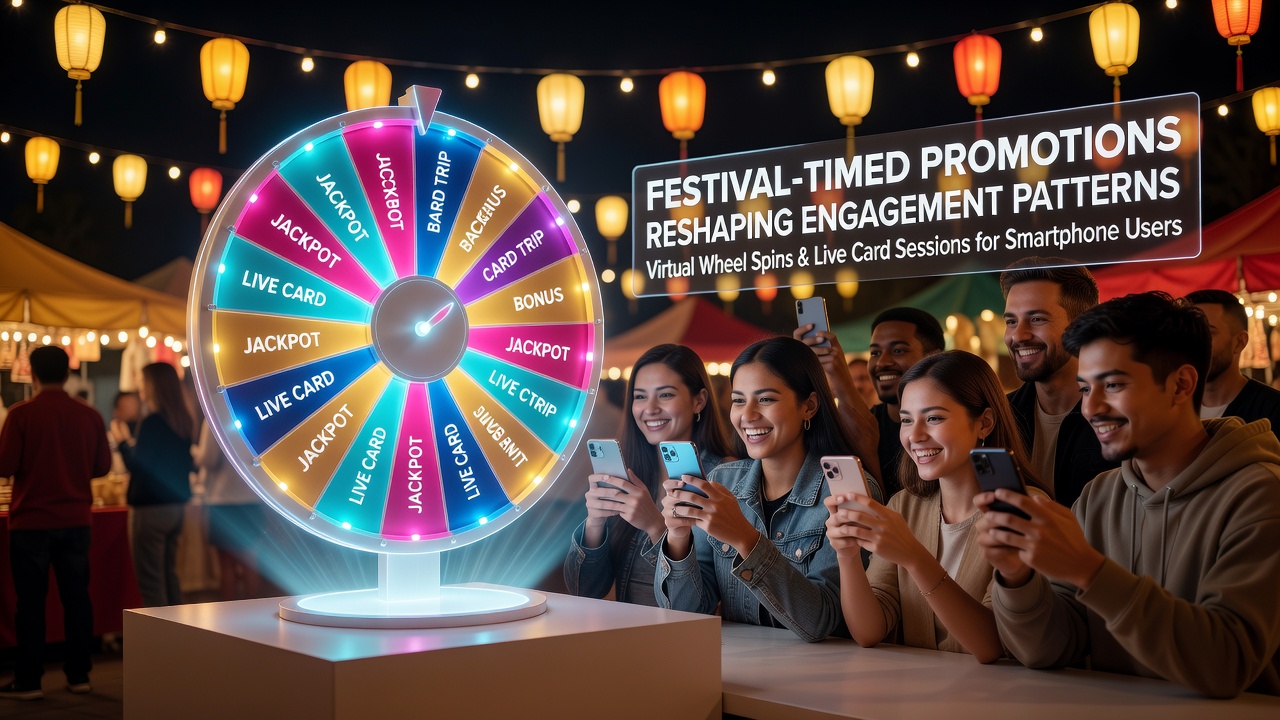
Festival-timed promotions reshaping engagement patterns in virtual wheel spins and live card sessions for smartphone users
Festival-timed promotions have altered how smartphone users interact with virtual wheel spins and live card sessions, and data from multiple markets shows these campaigns drive distinct spikes in session frequency during events such as summer music festivals and harvest celebrations. Operators schedule bonus multipliers, themed wheel segments, and live dealer tournaments to coincide with these periods, which produces measurable shifts in daily active users and average session duration.
Mechanics of Festival-Timed Promotions
Promotions tied to festivals typically launch several days before the main event and run through its conclusion, and they incorporate limited-time rewards that expire once the festival window closes. Virtual wheel spins receive new visual themes drawn from the event, while live card sessions feature dealer costumes and side bets linked to festival motifs, and these elements appear together in unified mobile interfaces that push notifications to users who have previously engaged with similar content.
Research from the Canadian Centre on Substance Use and Addiction indicates that participation rates in mobile gaming applications rise by double-digit percentages during coordinated festival campaigns, and the same reports note that wheel spin games attract a larger share of first-time festival players compared with card-based formats.
Shifts in Virtual Wheel Spin Engagement
Smartphone users demonstrate higher return rates to wheel spin applications when promotions include progressive prize pools that grow with collective festival participation, and session data reveals that players complete more spins per visit when daily login streaks award extra entries. Observers note that the average number of spins per user increases steadily from the start of a festival period through its peak day, after which activity levels taper but remain elevated above baseline for several subsequent weeks.
August 2026 provides a clear illustration, because multiple North American operators ran concurrent campaigns around major music and food festivals, and aggregated platform statistics showed wheel spin volume climbing throughout the month before settling into a new pattern of sustained, though lower, engagement.
Patterns Emerging in Live Card Sessions
Live card sessions on smartphones exhibit different rhythms under festival promotions, since players often join scheduled tournaments that align with evening festival programming rather than spinning wheels at random intervals. Tables fill more rapidly during these windows, and users who begin a session during a festival event tend to remain connected longer when dealers announce time-limited side bets or leaderboard challenges that conclude at the end of the promotion period.
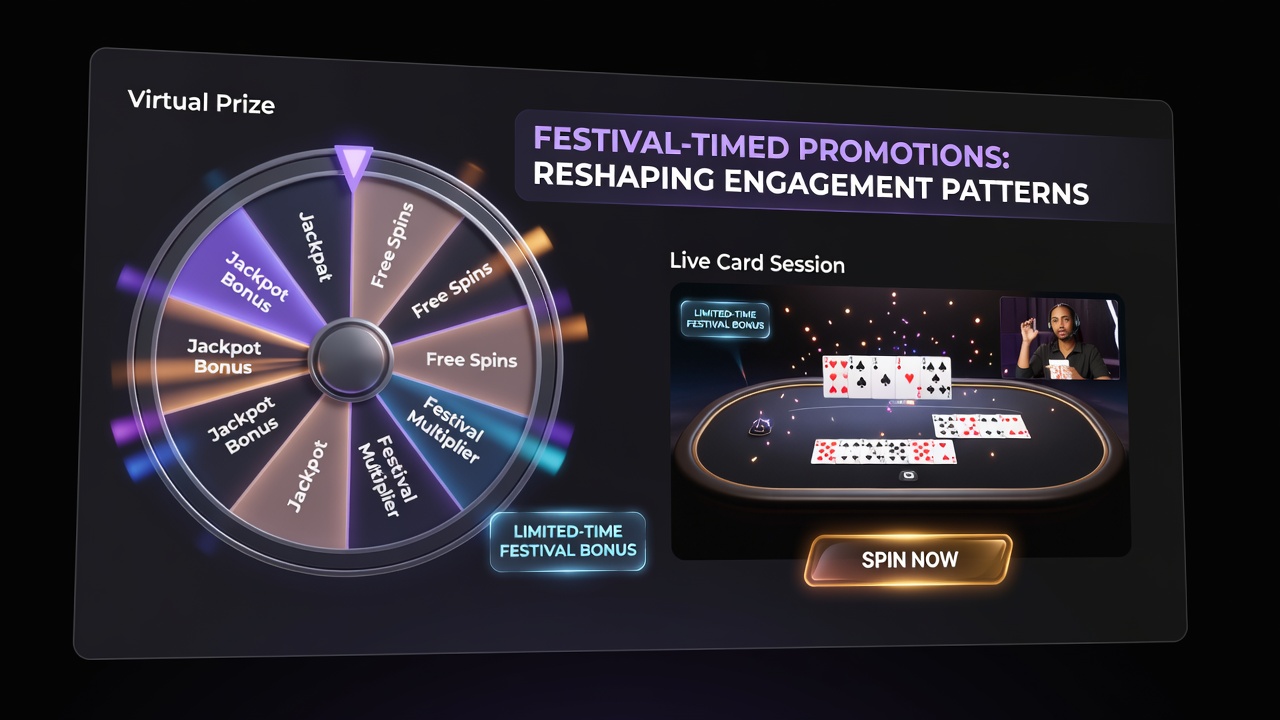
Figures from the Australian Gambling Research Centre reveal that live dealer table retention improves when promotions bundle free tournament entries with existing loyalty points, and the same data set shows smartphone users switching between wheel spin and card formats more frequently during festival windows than during ordinary periods.
Device-Specific Behaviors and Timing
Smartphone telemetry collected across several operators demonstrates that festival promotions increase evening and late-night usage clusters, particularly among users located in regions celebrating the same cultural events. Push notifications sent at festival start times produce immediate lifts in both wheel spin and card session launches, yet the duration of those sessions varies by game type, with wheel spins showing shorter but more numerous visits and live card tables recording longer continuous play.
Those who have tracked these metrics across multiple years report that the pattern repeats reliably when operators synchronize bonus structures with local festival calendars, and cross-device data further indicates that users rarely migrate to desktop platforms during these campaigns even when larger screens become available.
Regulatory and Measurement Context
Provincial regulators in Canada and state agencies in Australia require operators to report engagement metrics during promotional periods, and these filings provide the raw numbers that researchers use to quantify changes in wheel spin and card session activity. The American Gaming Association has published summaries of similar festival-linked data from U.S. markets, confirming that mobile formats capture the majority of incremental play generated by time-bound offers.
Because the campaigns remain tightly scoped to specific calendar windows, analysts can isolate their effects from broader seasonal trends and obtain clearer comparisons year over year.
Conclusion
Festival-timed promotions continue to influence smartphone engagement with virtual wheel spins and live card sessions through structured reward mechanics and synchronized event timing, and available data sets from multiple jurisdictions document consistent shifts in session frequency, duration, and cross-format movement. Operators and regulators alike monitor these patterns to refine both promotional design and compliance reporting, and the August 2026 examples illustrate how the approach produces repeatable outcomes across different festival contexts.